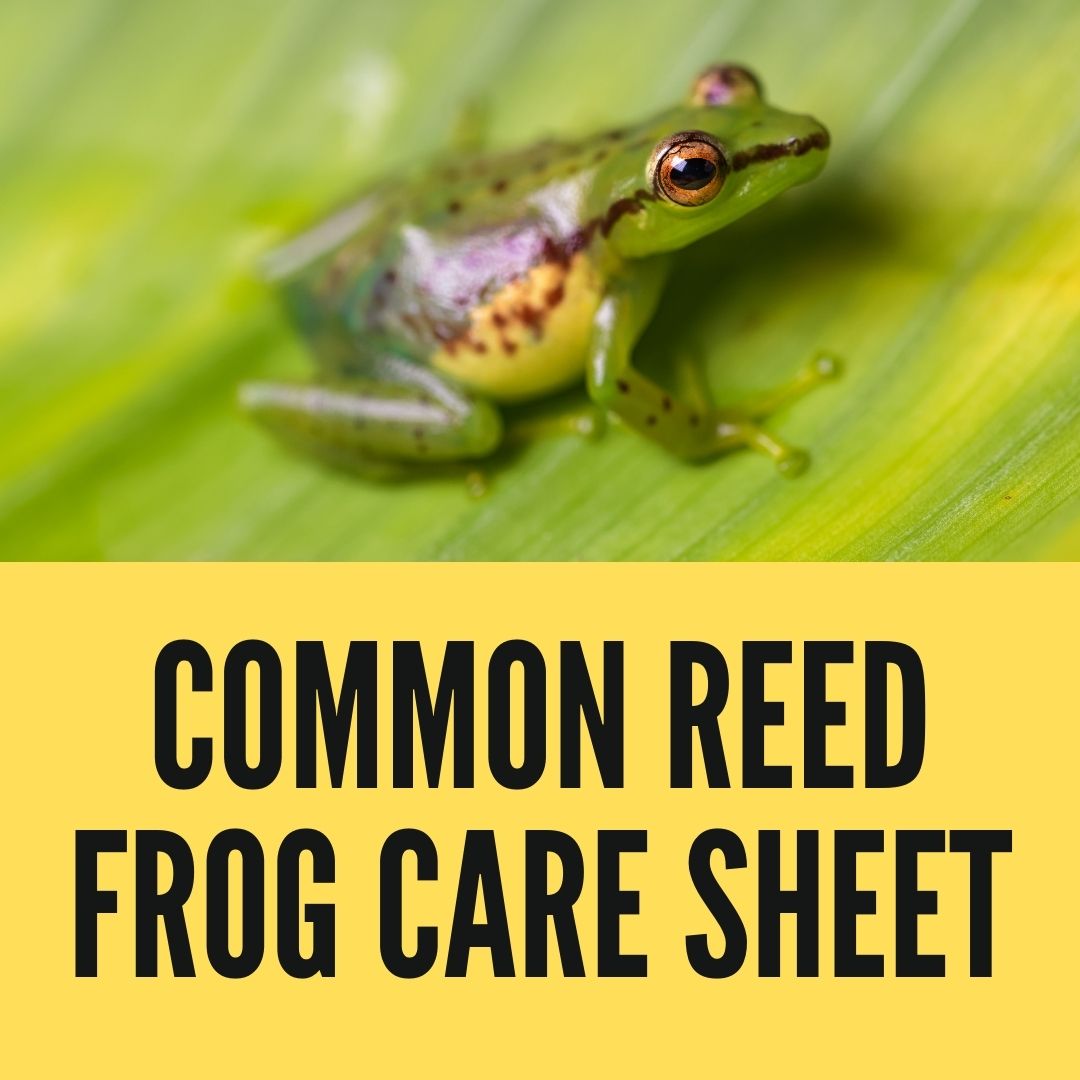
The Common Reed Frog (Hyperolius viridiflavus), part of the large Hyperoliidae family, is a small, vibrant arboreal amphibian native to sub-Saharan Africa. Valued as beginner-friendly pets due to their hardy nature, eye-catching colors, and lively personalities, they require specific care to thrive in captivity. This comprehensive care sheet covers feeding, housing, breeding, lighting, temperature, humidity, and handling requirements for successful reed frog husbandry.
Natural History and Description
Common Reed Frogs typically reach lengths of 1.5 to 2 inches. They exhibit bright green, yellow, or brown coloration with distinctive spots or banding, which may vary based on age, sex, and mood. These frogs spend most of their lives in vegetation near water bodies like ponds, marshes, and streams. They are nocturnal, engaging in distinct calls during breeding seasons.
Housing and Enclosure Setup
Enclosure Size and Type
An individual reed frog requires at least a 10-gallon enclosure (approx. 12x12x18 inches), with larger spaces recommended for small groups. Screen cages or glass aquariums fitted with mesh lids provide optimal airflow while maintaining humidity.
Substrate and Furnishings
Moist substrates like coconut fiber or sphagnum moss encourage humidity regulation; paper towels work for quarantine setups but are less natural. Live or artificial plants such as pothos or bromeliads are essential, providing cover and climbing surfaces.
Incorporate natural branches, small bamboo poles, and cork bark to simulate the arboreal habitat. A shallow water dish (1-2 inches) with dechlorinated water allows hydration and occasional soaking.
Temperature and Humidity
- Maintain daytime temperatures between 73–82°F (23–28°C), with nighttime temps around 65–72°F (18–22°C).
- Keep humidity between 70–90%, achieved by misting 1–3 times daily or via automated systems.
- Good ventilation is crucial to prevent fungal infections.
Lighting
Provide a natural photoperiod of 10–12 hours of light daily. UVB lighting is not mandatory but can improve plant health and overall enclosure conditions. Use indirect lighting to avoid overheating.
Feeding and Diet
Reed frogs are insectivores with voracious appetites:
- Offer a variety of live insects like small crickets, fruit flies, springtails, and small moths.
- Juveniles require daily feedings, adults can be fed every 2-3 days.
- Gut-load feeder insects with nutrient-rich foods before feeding.
- Dust feeders periodically with calcium powder (2–3 times weekly) and multivitamins (once weekly) to prevent deficiencies.
Breeding
Breeding Common Reed Frogs requires simulating seasonal environmental changes:
- Increase humidity and misting frequency to emulate the rainy season.
- Allow males to call at night, attracting females for mating.
- Provide aquatic or semi-aquatic substrates with plants or overhanging leaves for egg deposition.
- Tadpoles hatch in water and should be reared separately with clean, aerated water and appropriate larval diets like algae wafers and tropical fish flakes.
- Metamorphosis takes 6–12 weeks depending on environmental conditions.
Handling and Behavior
Minimize handling to reduce stress and avoid damage to the frog’s delicate, permeable skin. Use clean, wet hands or gloves if handling is necessary. Reed frogs are generally shy but display bright colors, especially during breeding or stress.
Maintenance and Health Considerations
- Spot-clean daily by removing waste and uneaten food.
- Replace substrate every 4–6 weeks or when soiled.
- Prevent skin infections and fungal diseases by maintaining proper humidity and ventilation.
- Quarantine new frogs before introducing them to existing populations to avoid parasite transmission.
Tank Furniture
The reed frogs will spend most of the time stuck under the artificial plant leaves and tank walls near the top or tucked in to one of the corners of the lid. These frogs do occasionally like to bask in the sun for a while so if you added a piece of bog wood you can aim a spot light at this for basking purposes.
Cleaning
These frogs will often defecate on the walls of the tank so it will become dirty quite quickly depending on how many frogs you have in the tank. It is advisable to clean the tank every 2 to 3 weeks and remove the moss and gravel for cleaning.
If the moss is clean it can be re used and the gravel should be washed before replacing it.The empty tank should be sterilised to ensure it is clean, use something like Ark Klens to do the job.
Any droppings on the tank should be removed and the tank itself thoroughly cleaned to prevent mould from growing on it. During the cleaning process the frogs should be kept in a plastic container with a secure fitting ventilated lid.
Put some wetted kitchen paper in the container with them to keep them moist.
Summary Table – Common Reed Frog Care
| Factor | Recommendations |
|---|---|
| Enclosure size | Minimum 10-gallon; larger for groups |
| Temperature | Day: 73–82°F, Night: 65–72°F |
| Humidity | 70–90%; regular misting |
| Lighting | 10–12 hr natural photoperiod; UVB optional |
| Diet | Variety of gut-loaded insects, calcium & vitamins |
| Water | Shallow dechlorinated water dish changed regularly |
| Handling | Minimal; use wet hands or gloves |
| Breeding | Mimic rainy season humidity, aquatic egg sites |
| Cleaning | Spot clean daily; deep clean monthly |
Common Reed Frogs are excellent amphibian pets for hobbyists seeking colorful, active, and relatively easy-to-care-for frogs. Success in keeping and breeding reed frogs depends on replicating their natural temperature, humidity, and aquatic environment, providing a balanced diet, minimizing stress, and maintaining cleanliness. This guide equips keepers at all levels with actionable knowledge for fostering healthy and vibrant reed frog populations.